-
-
- .
-

1.1 e-Portfolio: Definition
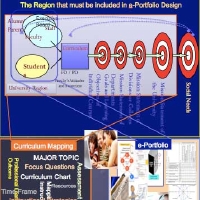
The design of e-Portfolio for a school begins by setting up the mission for the school. Based on the needs of the society, the school decides how to make the young generation ready for the society through education. In order to set the mission of the school, the school must have clear educational goals to produce new members of the society based on the profound idea of producing ideal people for the nation. Thus, the school must provide students with interactivity in learning to promote human growth in a constructive way. As the students learn, the records of growth of individual students as well as the evaluation of learning are archived in e-Portfolio in order for all stakeholders to share the information of how the students are doing as well as how the school is doing in education.
In the process of realizing the vision reflected in the mission statement, the assessment or evaluation system for e-Portfolio must clearly evaluate the learning activities and the records of the human growth in academia from multiple dimensions and guide them to the next level of growth. Thus, the e-Portfolio must bear the responsibility of sharing the students’ records of growth with their guardians and other stakeholders. The life-long records of the processes of growth for all students as well as the records of evaluation are analyzed even at a higher level to offer predicted “life-to-be” for the currently enrolled students, in other words, older students will serve as role models for the younger generation students. This type of e-Portfolio will show the students how the life will be with a similar life design in 10 years later, 20 years later, 30 years later, or even 40 years later, making reference to their predecessors’ footprints in life.
In what follows, various e-Portfolio systems in action are reported with examples. First, the Kansai University e-Portfolio (for K-12, undergraduate, and graduate programs) is viewed.
Last Update: June, 2012.